




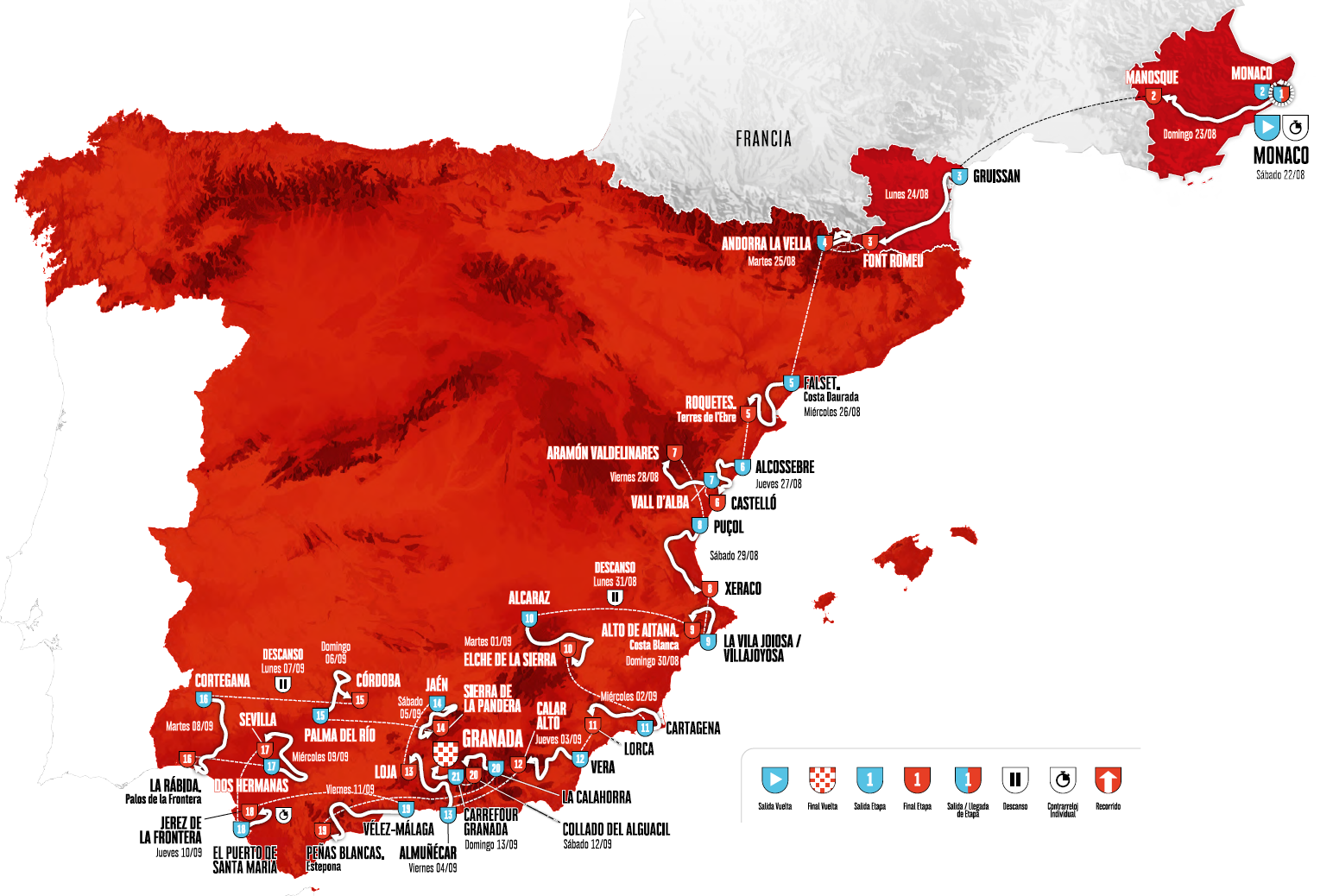
We already knew that the first stage of the Vuelta a España 2026, or Tour of Spain 2026, would take place in Monaco, in the form of a time trial. We now know that the start of this 81st edition of the Vuelta a España will definitely be international, passing through Monaco, but also France and Andorra, before finally heading to Spain!
We also know, following the official presentation on Wednesday evening, that this edition of the Tour of Spain will be extremely difficult, with the organizers describing it as one of the toughest editions in the history of La Vuelta. This is mainly due to the fact that it will take in mountainous areas, both in northern Spain after the start in Monaco, France, and Andorra, and in southern Spain, in Andalusia, where this edition will have a long stay (10 stages).
The 2026 Tour of Spain in figures
Let's start by looking at the figures for this 81st edition of the Tour of Spain:The stages of the 2026 Tour of Spain in detail
CONTINUE READING AFTER THIS ADVERTISEMENT
The table of the 21 stages of the 2026 Vuelta a España
Here are the 21 stages of this Tour of Spain. Click on a stage to go directly to its description.| # | Date | Start | Finish | Distance/Remarks |
|---|---|---|---|---|
| 1 | Sat. August 22, 2026 | Monaco 🇲🇨 | Monaco 🇲🇨 | 9.6 km - CLM |
| 2 | Sun, August 23, 2026 | Monaco 🇲🇨 | Manosque 🇫🇷 | 215.2 km |
| 3 | Mon. August 24, 2026 | Gruissan 🇫🇷 | Font Romeu 🇫🇷 | 166.7 km |
| 4 | Tue, August 25, 2026 | Andorra La Vella 🇦🇩 | Andorra La Vella 🇦🇩 | 104.9 km |
| 5 | Wed, August 26, 2026 | Falset (Costa Daurada) | Roquetes (Terres de l'Ebre) | 171.1 km |
| 6 | Thu, August 27, 2026 | Alcossebra | Castellón | 176.8 km |
| 7 | Fri, August 28, 2026 | Vall d'Alba | Aramón Valedelinares | 149.9 km |
| 8 | Sat. August 29, 2026 | Puçol | Xeraco | 176.4 km |
| 9 | Sun, August 30, 2026 | La Vila Joiosa (Villajoyosa) | Alto de Aitana (Costa Blanca) | 187.5 km |
| R1 | Mon. August 31, 2026 | rest | ||
| 10 | Tue, September 1, 2026 | Alcaraz | Elche de la Sierra | 184.5 km |
| 11 | Wed. September 2, 2026 | Cartagena | Lorca | 156.1 km |
| 12 | Thu, September 3, 2026 | Vera | Calar Alto | 166.5 km |
| 13 | Fri, September 4, 2026 | Almuñécar | Loja | 193.2 km |
| 14 | Sat. September 5, 2026 | Jaén | Sierra de la Pandera | 152.7 km |
| 15 | Sun. September 6, 2026 | Palma del Río | Córdoba | 181.2 km |
| R2 | Mon, September 7, 2026 | rest | ||
| 16 | Tue, September 8, 2026 | Cortegana | La Rábida (Palos de la Frontera) | 186 km |
| 17 | Wed, September 9, 2026 | Dos Hermanas | Seville | 175 km |
| 18 | Thu, September 10, 2026 | El Puerto de Santa María | Jerez de la Frontera | 32.5 km - CLM |
| 19 | Fri. September 11, 2026 | Vélez-Málaga | Peñas Blancas (Estepona) | 205.1 km |
| 20 | Sat. September 12, 2026 | La Calahorra | Collado del Alguacil | 206.7 km |
| 21 | Sun, September 13, 2026 | Granada | Granada | 99.4 km |
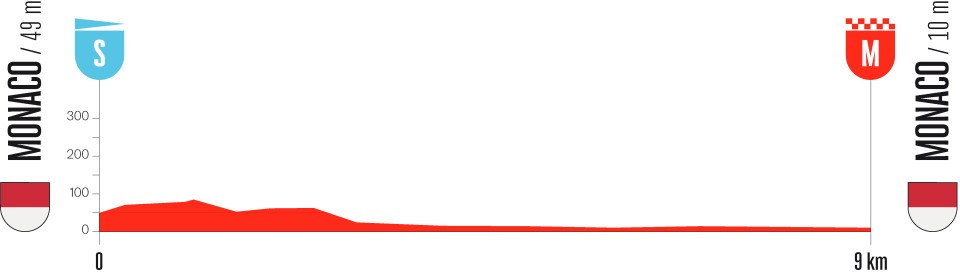
1/ Saturday, August 22, 2026 - Monaco 🇲🇨 > Monaco 🇲🇨 - individual time trial - 9.6 km
It all starts with an individual time trial in the streets of Monaco 🇲🇨, which will be tailored to specialists in individual timed events.The course, which covers the entire territory of the principality, is extremely technical, with numerous turns. However, the profile of the stage will be almost entirely flat.
For several weeks now, the map of this stage's route on OpenStreetMap has been available in the velowire app on iOS and Android! It will also be published on the website soon, but as will always be the case from now on, it was published first in the app. You can find it in the Maps section under Vuelta a España / Tour of Spain, for the year 2026.
The app is still in testing for now, but it is already available for any Android or iOS smartphone or tablet and is fully functional.
- On Android, it couldn't be easier: download the app directly from the Play Store.

- On iOS (iPhone/iPad) - follow the two steps to get the app

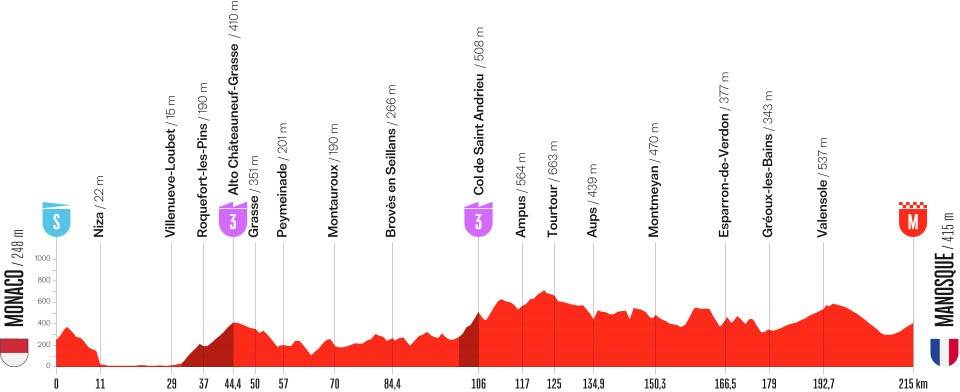
2/ Sunday, August 23, 2026 - Monaco 🇲🇨 > Manosque 🇫🇷 - 215.2 km
The second stage of the Vuelta a España 2026 will take place between two countries, starting in Monaco 🇲🇨 and finishing in Manosque 🇫🇷, France.At 215.2 kilometers, it will be the longest stage of the 2026 Tour of Spain, and the route will be hilly but not overly so. In the first half of the stage, after passing through Nice and Roquefort-les-Pins, there will be two category 3 climbs. First, the climb to Châteauneuf-Grasse (^ 410 m), then, about 60 kilometers further on, the Col de Saint-Andrieu (^ 508 m). In the second half, which passes through Aups, Montmeyan, Gréoux-les-Bains, and Valensole, there are a few other unclassified climbs before the finish in Manosque, which is also slightly uphill. The organizer mentions the possibility of a puncheur winning, but it is also quite possible that this stage will end in a sprint!
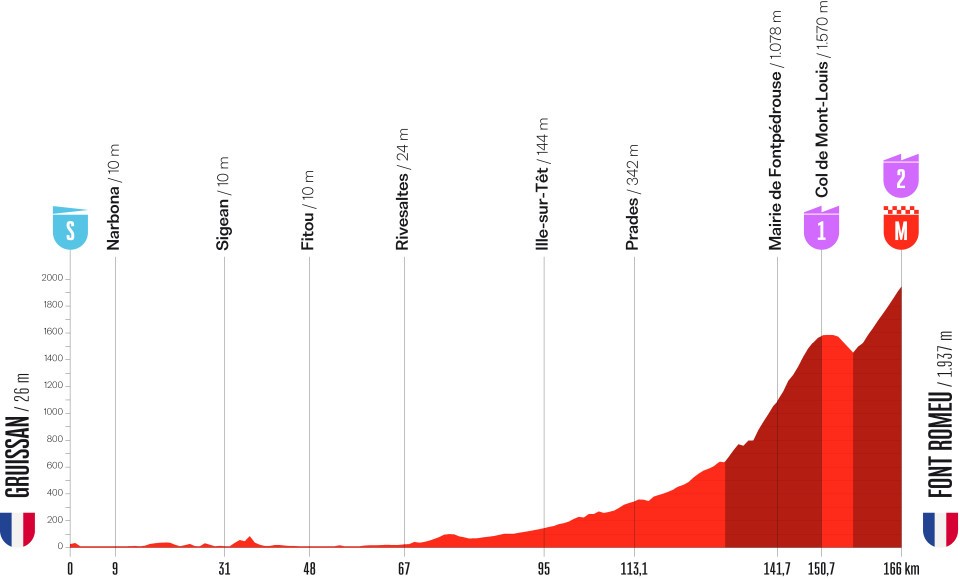
3/ Monday, August 24, 2026 - Gruissan 🇫🇷 > Font-Romeu 🇫🇷 - 166.7 km
The third stage will take place entirely in France, starting from Gruissan, and will be the first medium mountain stage.The first half of the stage, which passes through Narbonne, Sigean, Fitou, and Rivesaltes, will be entirely flat, but then there will be a long category 1 climb to the Col de Mont-Louis (^ 1,570 m), followed by a category 2 climb to the high-altitude finish in Font-Romeu (^ 1,937 m). It is likely that the red jersey of the overall leader will change hands at the end of this stage!
CONTINUE READING AFTER THIS ADVERTISEMENT
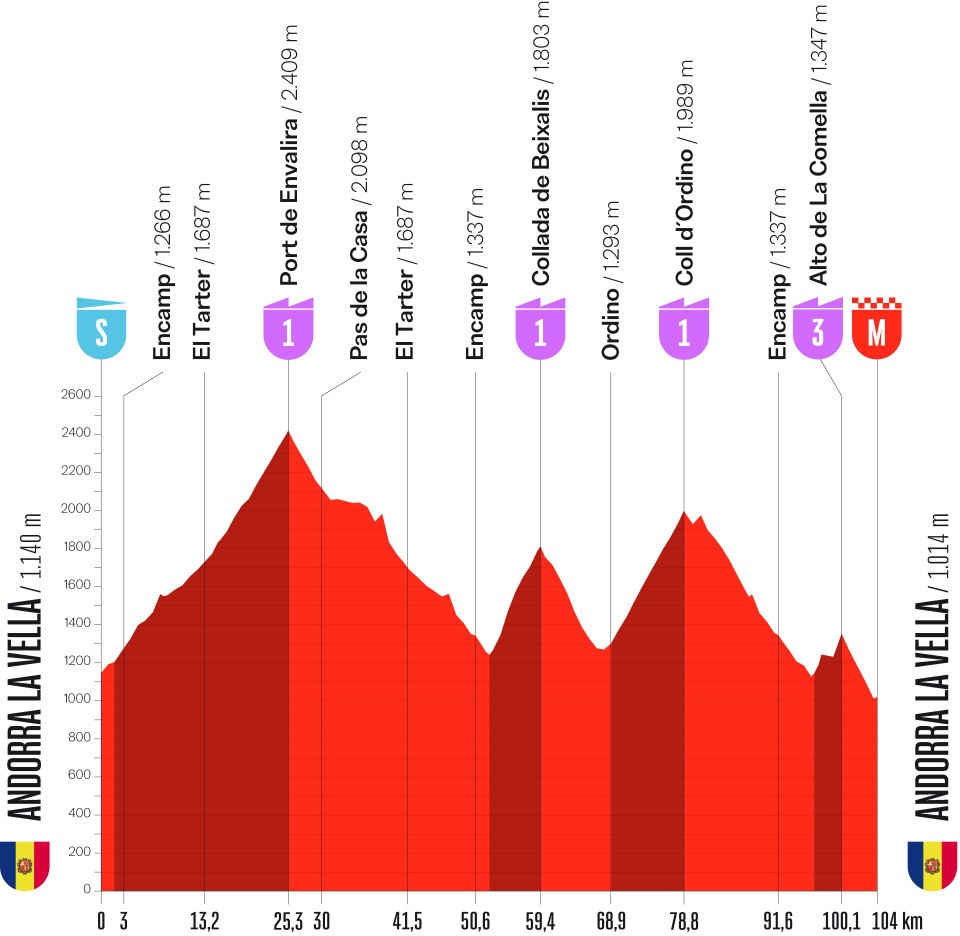
4/ Tuesday, August 25, 2026 - Andorra la Vella 🇦🇩 > Andorra la Vella 🇦🇩 - 104.9 km
The finish in Font-Romeu in the Pyrénées-Orientales was ultimately just a taste of what is to come in the mountains, as this short stage, which takes place in the second principality visited by this Tour of Spain, Andorra 🇦🇩, features no fewer than three category 1 climbs and one category 3 climb.And it starts right after the start in Andorra la Vella 🇦🇩, with the climb up Port de Envalira (^ 2,409 m), and as soon as they reach the foot of it, the riders then tackle the Collada de Beixalis (^ 1803 m), followed by the Coll d'Ordino (^ 1989 m) and finally the last climb, a third category ascent to the Alto de La Comella (^ 1347 m). The stage then ends with a descent of just under 4 kilometers, until shortly before the finish, also in Andorra la Vella.
5/ Wednesday, August 26, 2026 - Falset (Costa Daurada) > Roquetes (Terres de l'Ebre) - 171.1 km
The first stage in Spain will start in Falset (Costa Daurada) and will be much easier than the previous ones. It is almost flat and may suit a rider in a breakaway, but he will have to resist the peloton, which will be looking to make it a bunch sprint finish in Roquetes. It will probably not be the Alto de Paüls climb (^ 381 m) that will prevent the teams from organizing themselves for the sprint.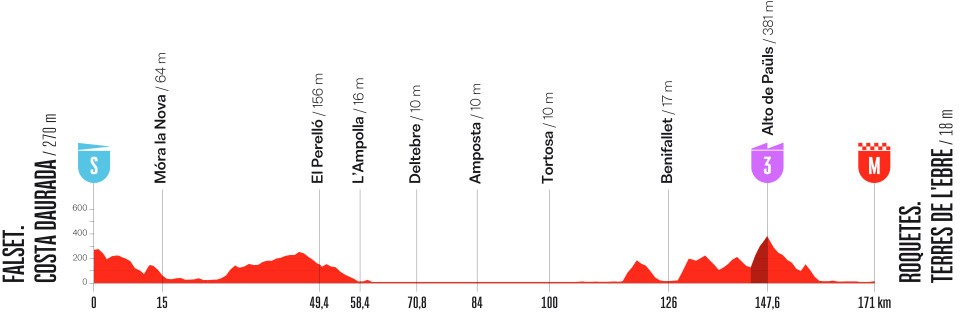
6/ Thursday, August 27, 2026 - Alcossebre > Castellón - 176.8 km
Starting from Alcossebre, a medium mountain stage awaits the riders of the Vuelta a España 2026 on Thursday, August 27, 2026. In the first half, we will undoubtedly see the breakaway of the day form on the first two climbs of the day, the Puerto de La Serratella (^ 799 m) and the Coll de la Bandereta (^ 785 m).The route then returns to the coast towards Benicàssim, to tackle the Alto del Desierto de las Palmas (^ 418 m) climb, classified as category 2, before passing through Benicàssim again and climbing it once more, but this time continuing on a dirt road for about 3 kilometers to Puerto El Bartolo, classified as category 1 (^ 713 m). This is a new climb in the Vuelta a España. This is followed by the descent and a few kilometers on the flat to the finish in Castelló.

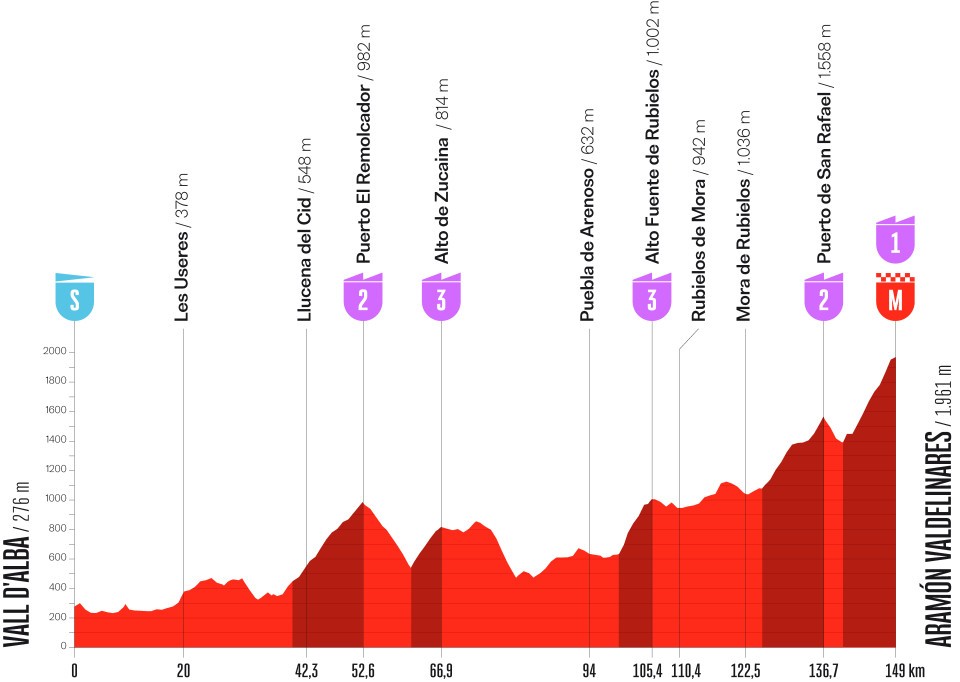
7/ Friday, August 28, 2026 - Vall d'Alba > Aramón Valdelinares - 149.9 km
The stage starting from Vall d'Alba will be a mountain stage, even though it begins calmly and then continues with only 2nd and 3rd category climbs: Puerto El Remolcador (^ 982 m, 2nd category), Alto de Zucaina (^ 814 m, 3rd category), Alto Fuente de Rubielos (^ 1002 m, 3rd category) and Puerto de San Rafael (^ 1558 m, 2nd category). At the top of the last climb, however, there is only a short descent before tackling the final climb to Aramón Valdelinares (^ 1961 m), a 1st category climb.Valdelinares last hosted the Vuelta a España in 2014, when a Colombian duo took advantage of the stage to win it (Winner Anacona) and take the red leader's jersey (Nairo Quintana).
CONTINUE READING AFTER THIS ADVERTISEMENT
8/ Saturday, August 29, 2026 - Puçol > Xeraco - 176.4 km
A new opportunity awaits the sprinters at the start of this 8th stage in Puçol. On an almost flat course, which carefully avoids all the nearby hills, they will only have to tackle the Puerto de Barx (^ 317 m), a category 2 climb, before competing in the sprint in Xeraco.The total distance of this stage is not entirely certain. In fact, in one place the organizer announces it as 176.4 km, while in another place it is announced as 168 km.

9/ Sunday, August 30, 2026 - La Villa Joiosa / Villajoyosa > Alto de Aitana (Costa Blanca) - 187.5 km
For the last stage of this busy first week, the Vuelta a España 2026 has another mountain stage in store for the peloton. Starting from La Villa Joiosa / Villajoyosa, the riders in the 2026 Tour of Spain know that more than 5,000 meters of elevation gain await them, spread over no fewer than six climbs, including the second - Puerto de El Miserat (^ 634 m) - and the final climb to Alto de Aitana (Costa Blanca) (^ 1545 m) will be the toughest, and therefore classified as first category (the other four are two second category and two third category climbs).
R1/ Monday, August 31, 2026 - rest day
After these nine stages, the riders in the Tour of Spain will finally be able to rest a little after transferring to Alcaraz, the starting point for the next day's stage.10/ Tuesday, September 1, 2026 - Alcaraz > Elche de la Sierra - 184.5 km
The riders will start the second week of the Tour of Spain at a leisurely pace, with a hilly stage starting in Alcaraz. They will have to climb three category 3 climbs, spread out fairly evenly throughout the stage, before battling it out for victory — in a sprint or a breakaway? — in Elche de la Sierra.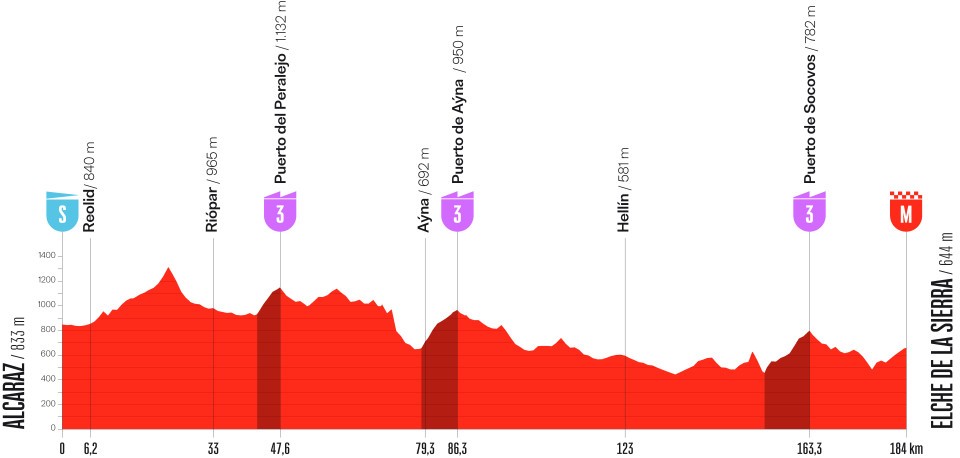
CONTINUE READING AFTER THIS ADVERTISEMENT
11/ Wednesday, September 2, 2026 - Cartagena > Lorca - 156.1 km
The 11th stage, starting from Cartagena, will be no more difficult and is in principle promised to the sprinters, unless they are caught out by the third category climb to Alto del Morrón de Totana (^ 624 m). At the finish in Lorca, the riders should therefore be able to compete en masse for the victory in a sprint.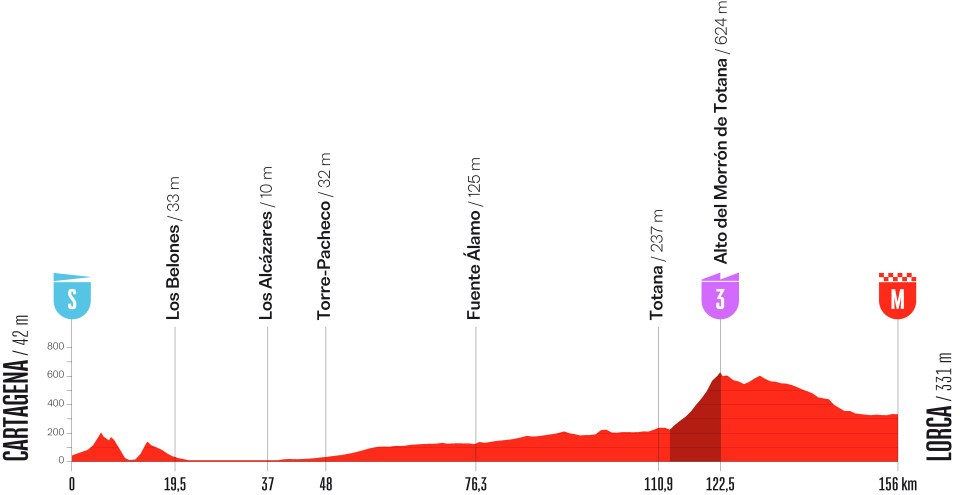
12/ Thursday, September 3, 2026 - Vera > Calar Alto - 166.5 km
Starting in Vera, a completely different stage awaits the riders of the Vuelta a España 2026. Unlike the previous stages, this one will really test the riders, with two third-category climbs and one second-category climb before a long descent that takes the riders to the foot of two first-category climbs: Alto de Velefique (1,789 m) and the summit finish at Calar Alto (2,153 m).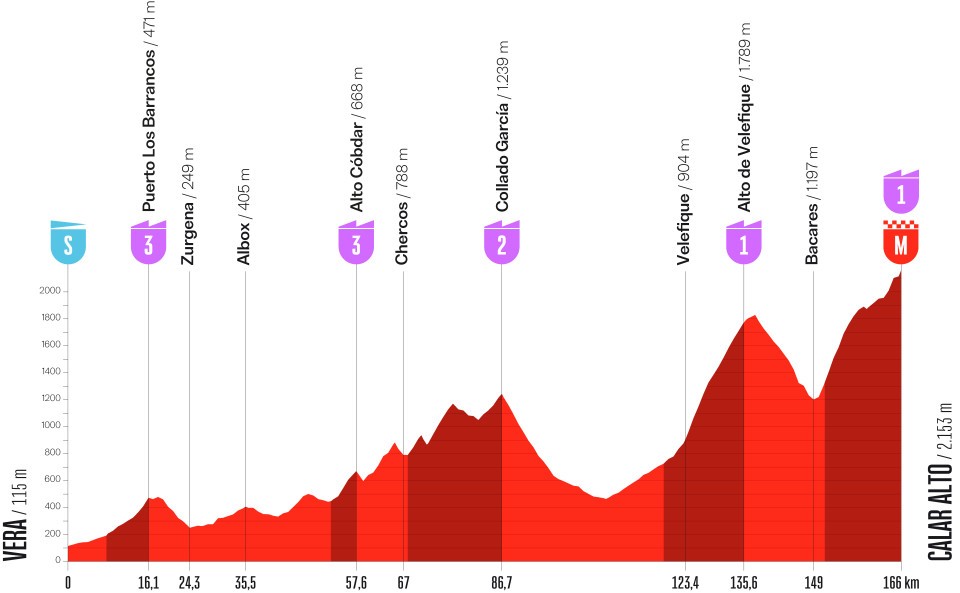
13/ Friday, September 4, 2026 - Almuñécar > Loja - 193.2 km
The 13th stage will be long, and the road climbs fairly quickly after the start in Almuñécar to reach the Puerto Los Guájares, a first category climb. Soon after, the riders will encounter a third category climb and, much further apart, two second category climbs, Alto del Legionario (1,347 m) and Puerto de Granada (^ 1034 m). At the top of the latter, the riders will be just under 40 kilometers from the finish in Loja, with the route mainly downhill from there.
14/ Saturday, September 5, 2026 - Jaén > Sierra de la Pandera - 152.7 km
Starting from Jaén, a new mountain stage awaits the riders, with a hilly first half and a more difficult second half. They will encounter two category 2 climbs, the Puerto de Los Villares (1,180 m) and the Puerto de Locubín (1,085 m). What makes the stage difficult is mainly the final climb, a first category climb to Sierra de la Pandera (^ 1797 m).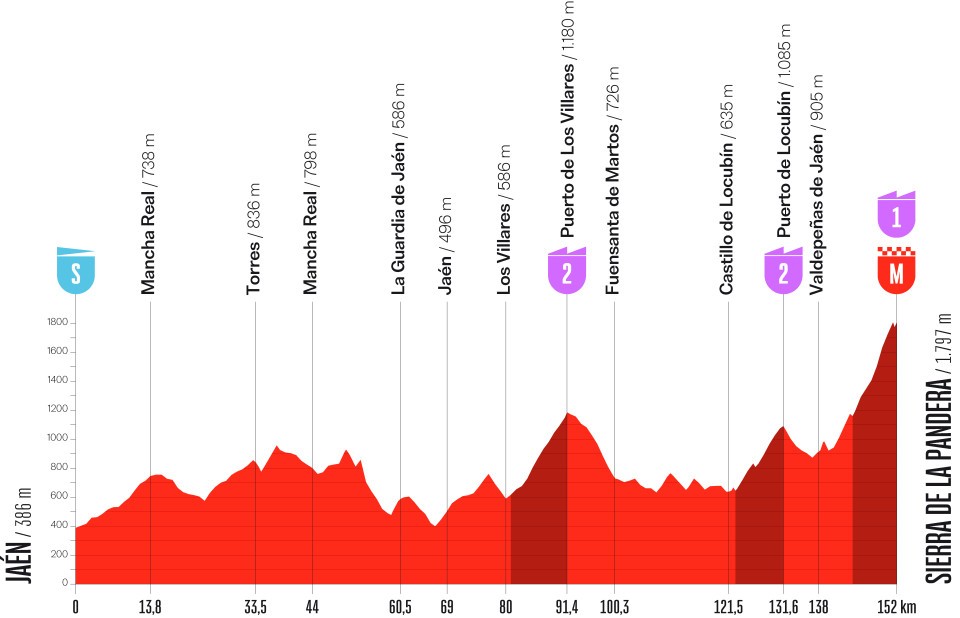
CONTINUE READING AFTER THIS ADVERTISEMENT
15/ Sunday, September 6, 2026 - Palma del Río > Córdoba - 181.2 km
This last stage before the second rest day of the 2026 Tour of Spain is classified as medium mountain, but in reality there are only three third-category climbs for the riders to tackle after the start in Palma del Río. The summit of the last climb is just under 30 kilometers from the finish in Córdoba, but the descent is discontinuous... and this stage could therefore favor either a strong rider in the breakaway who manages to hold on, or the sprinters who could battle for the victory after catching up with the breakaway.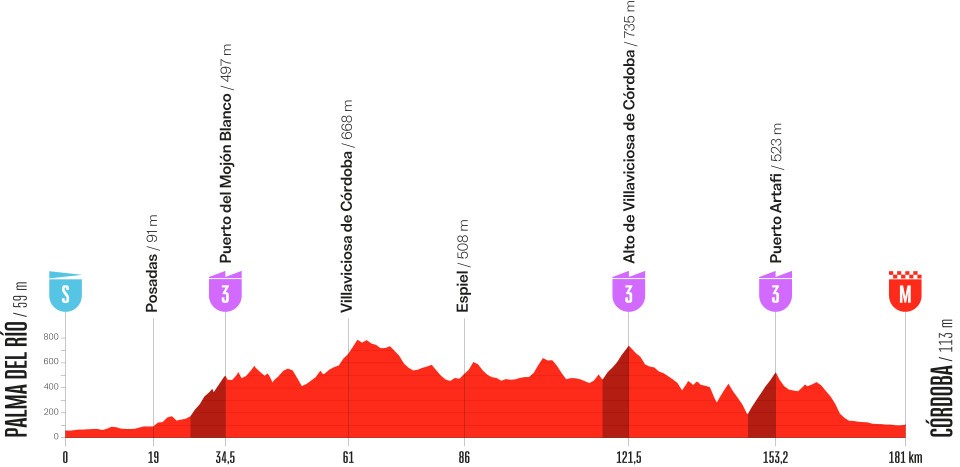
R2/ Monday, September 7, 2026 - rest day
After a transfer to Cortegana and thus after the stages of the second week of this 2026 Tour of Spain, the riders of the Vuelta a España 2026 will once again be able to rest from the efforts of the last few days.16/ Tuesday, September 8, 2026 - Cortegana > La Rábida (Palos de la Frontera) - 186 km
The third and final week begins with a flat stage, which will start in Cortegana, the westernmost point of the 2026 Vuelta a España. The first part of the stage will be winding and feature a few small hills, before leveling out as it approaches the sea and follows the coast to the finish in La Rábida (Palos de la Frontera). There are no referenced difficulties on this stage.
17/ Wednesday, September 9, 2026 - Dos Hermanas > Seville - 117.7 miles
The 17th stage will also be completely flat and without any difficulties. It will take place almost entirely in a loop between Dos Hermanas and Sevilla.
CONTINUE READING AFTER THIS ADVERTISEMENT
18/ Thursday, September 10, 2026 - El Puerto Santa María > Jerez de la Frontera - individual time trial - 32.5 km
On Thursday, September 10, the second individual time trial will be on the program for the Vuelta a España 2026. It will start at the seaside in El Puerto Santa María and follow an almost flat course with fairly long straights to Jerez de la Frontera.
19/ Friday, September 11, 2026 - Vélez-Málaga > Peñas Blancas (Estepona) - 205.1 km
To kick off the closing weekend of the 2026 Tour of Spain, the stage starting from Vélez-Málaga will not be a big mountain stage, with the first third flat, a third with a 2nd - Puerto de Las Abejas (^ 817 m) - and two third-category climbs, but after a short 20 km on the flat, it will be the final climb to the high-altitude finish in Peñas Blancas (Estepona) (^ 1264 m) that will mark the last third and the stage, as it is a first-category climb.
20/ Saturday, September 12, 2026 - La Calahorra > Collado del Alguacil - 187 km
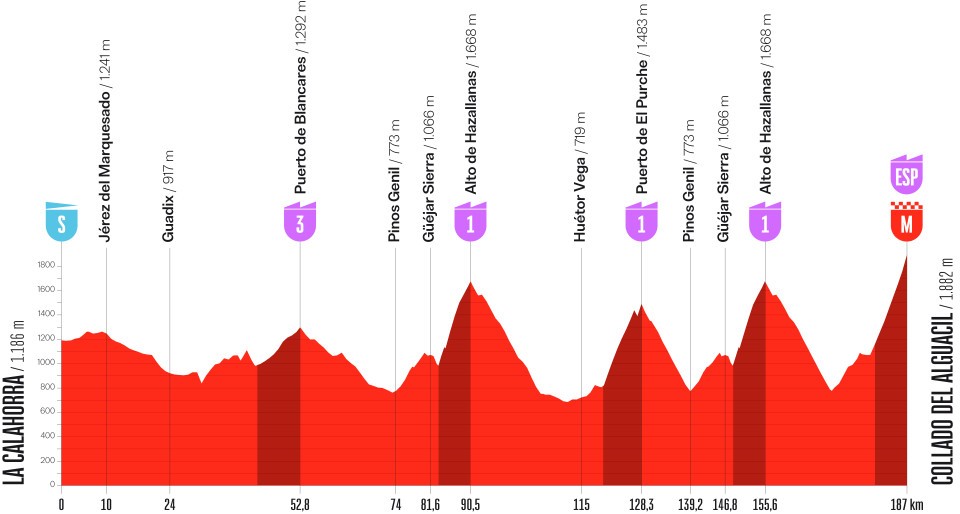
For this penultimate stage of the Vuelta a España 2026, a real mountain stage awaits the riders at the start in La Calahorra. After just under 50 kilometers, the riders will encounter a third-category climb, Puerto de Blancares (^ 1292 m), but it is the three first-category climbs and the final outside category climb that will make this stage difficult and could cause further changes in the general classification if the gaps are still small. They will seek out these difficulties by taking a route with some surprising loops.There is the first category Alto de Hazallanas (1,668 m), the Puerto de El Purche and then another climb up the Alto de Hazallanas, before pushing on towards the high-altitude finish at Collado del Alguacil (1,882 m). This unprecedented climb, 17 kilometers long in total and with a 20% gradient, is at its hardest over 8.3 kilometers with an average gradient of 9.8%. In total, the stage has an elevation gain of over 5,000 meters.
21/ Sunday, September 13, 2026 - Granada > Granada - 99.4 km
The final stage will be almost a loop, starting and finishing in Granada. The stage will first take place to the south and west of Granada, before ending on a final circuit climbing towards the Alhambra in Granada. The riders will complete this circuit five times before the winner of this final stage is known, which, given the configuration, could be either a sprinter or a puncheur.
The route of the 2026 Tour of Spain on video
Map of the 2026 Tour of Spain route
Vond u dit artikel interessant? Laat het uw vrienden op Facebook weten door op de buttons hieronder te klikken!
no comments yet | 2938 views
this publication is published in: Vuelta a España | Vuelta a España 2026
 by Sylvain over
That's almost 500 kilometers (495.8 km to be precise) of the the 3,291.5 km that the Vuelta a España 2026 will cover in total (or 3,283.5 km because, as we will see below, stage 8 is announced with two different distances; the organizer is also advertising a total distance of 3,275 km, but with the distances of the stages as advertised, I don't see how they arrive at this figure!
- 7 mountain stages
- 4 medium mountain stages
- 4 hilly stages
- 4 flat stages
- 2 time trial stages
All with a total elevation gain of no less than 58,156 meters.This will also be the first time since 1986 that the Vuelta a España will finish somewhere else than Madrid or Santiago de Compostela, namely in the historic city of Granada, more specifically at the legendary Alhambra Palace.